

Workforce Needs
National Priorities
Understanding the priorities of the federal government, particularly those of the Department of Defense (DOD), is a crucial first step in contributing to national defense and creating opportunities in your region.
How Federal Priorities Shape Defense Manufacturing
The Department of Defense, through various programs, offices, and initiatives, provides opportunities for states and communities across the country to contribute to the defense manufacturing sector, including leveraging local small and mid-sized manufacturing and technology firms.
These opportunities can have significant positive impacts on your local workforce and education initiatives and programs, as the industry responds to defense needs. To make the most of them, it helps to understand the big-picture goals that are steering federal investments and decisions.


Across the federal government, the overarching priorities in defense manufacturing are to:
Build resilient, secure supply chains
Reduce dependence on fragile or foreign sources for critical materials and technologies, add redundancy, and qualify new suppliers—including small and mid-sized firms.
Modernize manufacturing capabilities
Accelerate adoption of advanced and digital manufacturing so the defense industrial base can produce complex systems faster, more affordably, and with higher quality.
Grow a strong, future-ready workforce
Develop talent pipelines for engineers, technicians, operators, and other skilled roles, with training that keeps pace with new technologies and production needs.
Increase speed and agility in production
Shorten the time from concept to prototype to full production, especially when responding to emerging threats or urgent needs.
Broaden participation in the defense
industrial base
Bring more small, mid-sized, and non-traditional firms—and more regions and communities—into the defense supply chain.
Strengthen regional ecosystems and partnerships
Encourage collaboration among states, local workforce systems, education, and industry so they function as coordinated ecosystems, not isolated efforts.
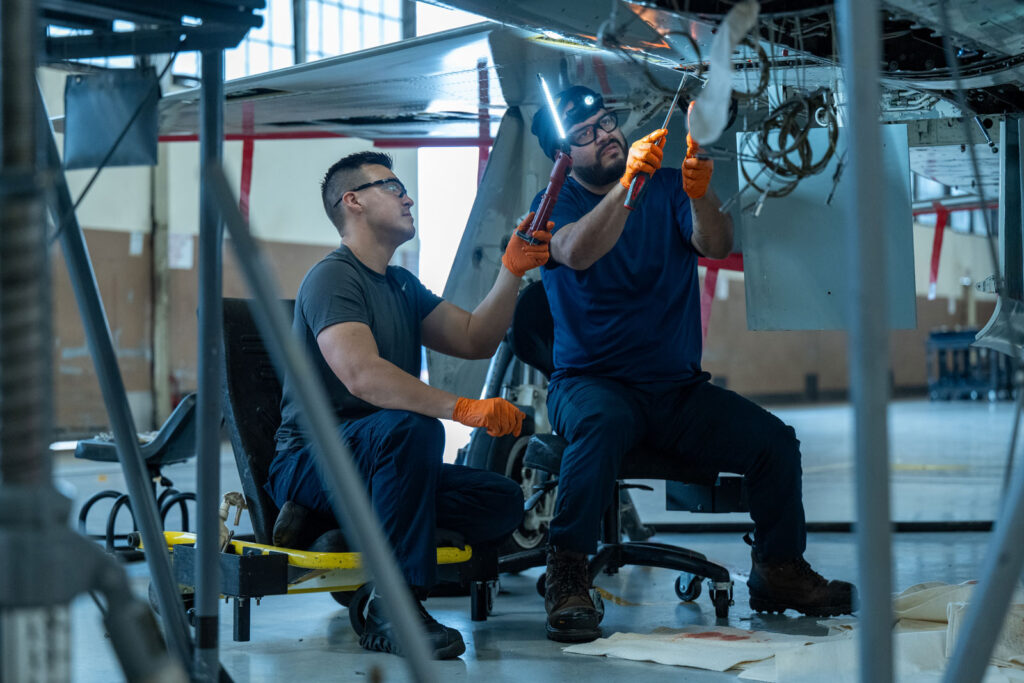
For workforce and economic development partners, these priorities lead to key questions:
- How can our local manufacturers and technology firms connect to defense supply chains?
- What skills, training, and credentials will workers in our region need to compete?
- Which federal strategies line up with our regional strengths—and where are the gaps we can help fill?
The strategies and reports below provide more detail on how these priorities are being implemented and where state and local partners can get involved.
Department of Defense
Department of Defense Critical Technology Areas
In November 2025, the Office of the Under Secretary for Research and Engineering designated six Critical Technology Areas (CTAs) that are foundational to the U.S.’s national security needs.
The six CTAs are:
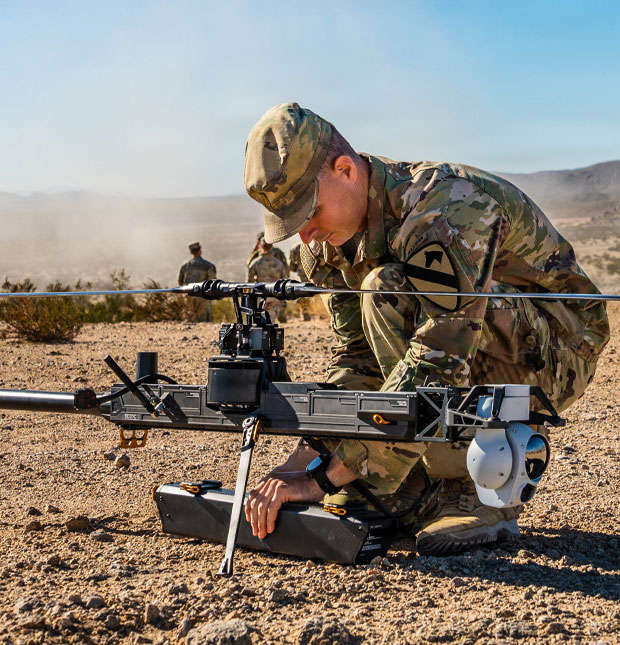
Why this matters to local workforce development efforts:
CTAs drive billions in DoD funding The DoD’s budget request and execution are increasingly aligned to these six areas. Companies, universities, and labs that can supply talent in these fields are better positioned to win funding.
They define the skills the defense industrial base desperately needs Industry partners, big and small, all report severe shortages in these areas. Workforce professionals who align training, apprenticeships, and degree programs to these CTAs directly address the biggest constraint on program execution: lack of cleared, skilled talent.
They shape state and regional economic development Many states are now building entire tech corridors and workforce initiatives around one or more CTAs. Workforce boards that understand the DoD list can compete for federal dollars, such as Department of Labor’s Defense Talent Pipeline grants, National Science Foundation Regional Innovation Engines, Economic Development Administration Tech Hubs, and others.
The National Defense Strategy
The National Defense Strategy outlines the government’s comprehensive approach to Department of Defense priorities, encompassing military planning, strategic development, and modernization through technology and manufacturing.
Why it matters for you:
- How can our local manufacturers and technology firms connect to defense supply chains?
- What skills, training, and credentials will workers in our region need to compete?
- Which federal strategies line up with our regional strengths—and where are the gaps we can help fill?
National Defense Industrial Association (NDIA) Vital Signs Report
The Vital Signs report from the National Defense Industrial Association is an annual report that assesses the overall health of the defense industrial base, including workforce, supply chain, and innovation indicators.
Why it matters for you:
- Offers data and trends to inform local planning and funding decisions
- Provides metrics you can use to make the case for investment in talent, infrastructure, and technology
Assessing and Strengthening Manufacturing and DIB Resiliency
In 2017, the President issued Executive Order 13806 to assess and strengthen the U.S. defense industrial base and supply chains vital to national security. The Department of Defense (DoD) led an interagency review that produced a report outlining strengths, weaknesses, risks, and recommendations to improve resiliency.
Why it matters for you:
- Strategies focus on immediate hiring, retention, training pipelines, and removing barriers.
- Details the role of all government agencies to develop policies and funding opportunities to address.
- Highlights current and future activities.
National Academies Report on MIIs
The National Academies’ report on MIIs, sponsored by DOD, offers findings and best practices on how Manufacturing Innovation Institutes support technology, industry collaboration, and education and workforce development.
Why it matters for you:
- Shares proven models for designing effective manufacturing education and workforce programs
- Highlights collaboration approaches that can be adapted to regional initiatives

Want More Information?
Email us at:
info@manufacturingmomentum.org
Lorem Ipsum is simply
Step-by-step support for tackling complex challenges.
Lorem Ipsum is simply dummy text of the printing.
Lorem Ipsum is simply dummy text of the printing and typesetting industry. Lorem Ipsum has been the industry’s standard dummy text ever since the 1500s, when an unknown printer took a galley of type and scrambled it to make a type specimen book.